
Our Projects and Initiatives
Creating opportunities. Strengthening communities.
At Aid For Africa Down Under (AFADU), we believe that every child deserves the opportunity to grow up in a safe, supportive environment, receive an education and build a positive future.
Since our establishment in 2004, we have worked alongside local communities in Zimbabwe to support vulnerable children, improve access to education and healthcare, and develop sustainable initiatives that create lasting opportunities.
Our work extends beyond providing immediate assistance. Through partnerships, community-led projects and practical development programmes, we aim to strengthen local resources, encourage self-sufficiency and create an environment in which children and families can thrive.
From providing a safe home, educational opportunities, developing sustainable agriculture, clean water infrastructure and vocational training, each of our initiatives contributes towards a more secure and sustainable future.

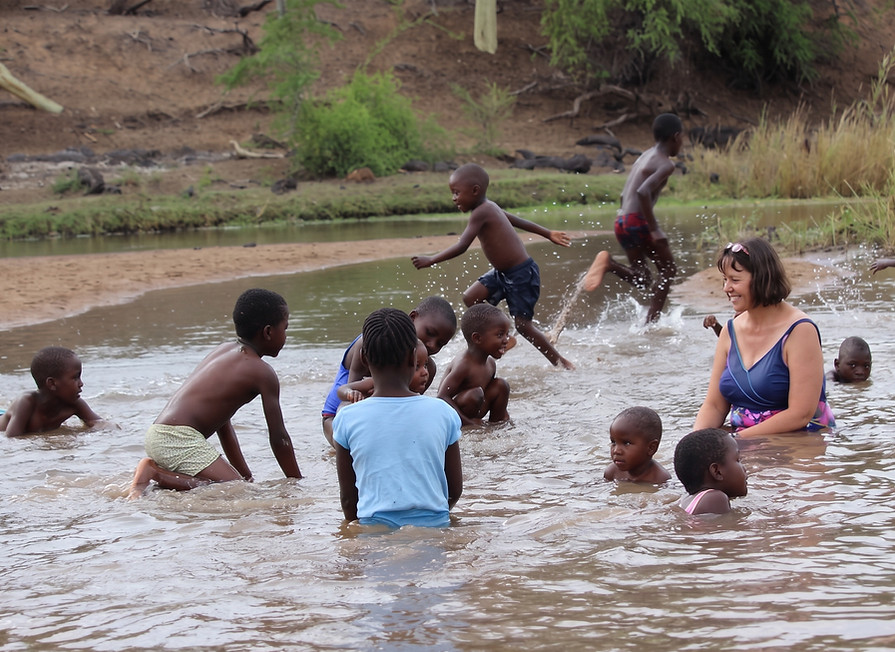
Lirhanzo Children's Village
Lirhanzo Children’s Village is at the heart of AFADU's work and the reason the organisation was established.
Lirhanzo Children's Village provides a safe, stable and supportive home for orphaned and vulnerable children, and children whose families are unable to care for them.
The village was developed through the efforts of Ezelle Schimper, AFADU and local supporters. It was officially opened in June 2010 and formally registered with the Zimbabwean Government in 2010.
Lirhanzo Children’s Village provides safe accommodation and a family environment, daily meals and nutritional support, clothing and essential supplies, medical care and healthcare support, education and school fees, support from dedicated guardian mothers, long-term care and guidance as children grow into adulthood and assistance with further education, including university.
The village employs guardian mothers who provide daily care, nurturing and supervision. The intention is to create a family environment rather than simply an institutional residential facility.
Several children who grew up at Lirhanzo Children’s Village have progressed to university and subsequently returned to contribute to the community.


Lirhanzo Primary School
Education is one of the most powerful tools for creating lasting change. At AFADU, we believe every child deserves access to quality education, regardless of their circumstances or where they are born.
Recognising the importance of education within the local community, AFADU has played an important role in the establishment and development of Lirhanzo Primary School, helping fund the construction of school buildings and providing essential support towards creating a dedicated learning environment for children in this remote rural region of southern Zimbabwe.
Today, Lirhanzo Primary School provides educational opportunities for more than 350 students from Lirhanzo Children's Village and the surrounding communities. For many children, having access to a school within their local area removes significant barriers to education, reducing the need to travel long distances and making regular attendance more achievable for families.
The school operates through a partnership between AFADU, the Zimbabwean Government and local educators. AFADU has supported the employment of teachers and the provision of educational resources, working alongside government-appointed teaching staff to deliver primary education to local children.
Beyond providing classrooms and teachers, the school represents an investment in the future of the entire community. It gives children the opportunity to develop literacy, numeracy, confidence and essential life skills, while creating a pathway towards further education and greater independence.
Through continued support for Lirhanzo Primary School, AFADU is helping ensure that hundreds of children have the opportunity to learn, develop and build brighter futures.


Solar-Powered Water Supply & Irrigation Project
Access to reliable water is essential for health, education, food production and sustainable community development.
In a remote and often drought-affected region of southern Zimbabwe, securing a dependable water supply has been a particularly important priority for Lirhanzo Children's Village and its local community.
AFADU has supported the development of a water pumping and irrigation system that draws water from the nearby Mwenezi River, approximately three kilometres from the village. Originally established using diesel-powered pumping equipment, the system was developed to provide water for the village, school facilities, gardens and surrounding agricultural activities.
Recognising the ongoing costs and practical difficulties associated with diesel-powered pumping, AFADU subsequently supported the transition towards solar-powered pumping infrastructure. By harnessing the abundant sunshine of the region, solar energy offers a more sustainable and cost-effective way to move water from the river to where it is needed.
The system provides an important foundation for daily life at Lirhanzo, supporting drinking water and hygiene, for both the orphanage and school, as well as agricultural irrigation. It also contributes towards local food production and the development of surrounding farming activities.
This initiative demonstrates how investment in essential infrastructure can create benefits that extend well beyond the immediate needs of the children's village, helping build greater resilience and sustainability throughout the wider community.
Commercial Garden & Sustainable Farming Project
Sustainable food production is an important part of AFADU's commitment to improving food security and developing greater self-sufficiency at Lirhanzo Children's Village.
Through the development of a commercial vegetable garden, AFADU has helped establish an agricultural project that produces fresh food for the children while also creating opportunities for local employment, skills development and income generation.
With access to irrigation from the village's water supply system, the garden enables a range of vegetables and other crops to be cultivated in an area where reliable water can otherwise be difficult to obtain.
Produce grown in the garden contributes towards the children's daily nutritional needs, providing fresh and locally produced food. Surplus produce can also be sold within the surrounding community, generating additional income to help support the ongoing operation and development of the project.
The garden also provides valuable practical agricultural experience. Children have opportunities to learn about planting, soil preparation, irrigation, crop maintenance and harvesting, while local workers develop skills in agricultural management, production planning and sales.
By combining food production, education, employment and commercial activity, the garden represents an important step towards greater food security and long-term financial sustainability.


Lirhanzo High School
For many children in remote rural communities, completing primary school does not guarantee the opportunity to continue their education.
Financial and practical barriers to accessing secondary schooling can often force children to leave education prematurely.
Recognising this challenge, AFADU has supported the development of secondary education at Lirhanzo, helping create a pathway for children to continue their studies closer to home.
Previously, students faced travelling approximately 35 kilometres to Chikombedzi to attend high school. For families already experiencing financial hardship, the costs of transport, accommodation and school fees made further education difficult to access.
A significant milestone was reached in 2024 when the Zimbabwean Government authorised secondary education at Lirhanzo. Five additional government teachers were appointed, enabling an initial intake of 35 students to begin their high school education locally.
This development is an important step towards improving educational opportunities for the surrounding community, particularly for girls, who can face additional social and financial barriers to continuing their studies.
Further expansion of the facilities, including an additional classroom building, remains an important part of the school's ongoing development.
AFADU is committed to helping children progress beyond primary school, gain further qualifications and develop the skills and knowledge needed to build independent and meaningful futures.
By bringing secondary education closer to home, we hope that a child's circumstances or geographical location will never determine how far they can go.

Teachers Housing
Access to education depends not only on having classrooms and learning materials, but also on having qualified and dedicated teachers available to support students
For schools in remote rural communities, attracting and retaining teaching staff can be particularly difficult when suitable accommodation is unavailable.
AFADU has supported improvements to educational infrastructure at Lirhanzo, including initiatives to provide accommodation for teachers working at the school.
Through fundraising and successful applications to the Australian Government's Direct Aid Program, administered through the Australian Embassy in Zimbabwe, AFADU has helped secure funding towards teacher accommodation.
Providing suitable housing close to the school helps improve the ability to attract and retain teaching staff, supporting greater continuity in children's education.
Alongside classroom development and school facilities, these investments help establish the practical foundations needed for a sustainable local education programme.

Supporting our Guardian Mothers
AFADU recognises that the wellbeing, care and education of the children at Lirhanzo Children's Village depend on the dedication of the people who support them every day.
As part of its ongoing commitment, AFADU provides financial assistance towards the wages of the village's guardian mothers, who play an invaluable role in caring for the children.
These women provide daily supervision, guidance, nurturing and a stable family environment, helping to ensure that every child receives the love, attention and support they need to grow and thrive.
In addition to supporting the guardian mothers, AFADU has also previously contributed towards the payment of teachers' wages at Lirhanzo Primary School, helping to maintain essential teaching staff and ensure children have access to consistent, quality education.
By investing in both the people who care for the children and those who educate them, AFADU helps strengthen the foundations of a safe, supportive and nurturing environment in which children can learn, develop and build brighter futures.

Chicken Farming & Egg Production Project
AFADU has also supported the development of small-scale poultry farming at Lirhanzo, providing another practical way to improve food security and create opportunities for sustainable income generation.
The initiative incorporates both broiler chicken production and egg farming. Chickens are raised for meat and sold locally, while eggs provide an additional source of nutritious food for the children and can also be sold to generate income.
The project is managed by local staff, with opportunities for children to become involved in feeding, caring for and learning about the birds. Through these activities, children gain practical experience in animal husbandry, responsibility and basic agricultural management.
The poultry project complements the village's wider agricultural programme, demonstrating how relatively small farming enterprises can contribute towards nutrition, employment and financial independence.
By developing practical food-producing activities within the village, AFADU aims to reduce reliance on externally purchased supplies while creating opportunities for local enterprise.

Community Grain Processing & Grinding Mill
Access to agricultural production is only part of the food security challenge. Farmers also need practical and affordable ways to process their harvests into usable food products.
AFADU has supported the development of a community grinding mill, providing a facility for processing locally grown grains such as maize and sorghum into flour and meal.
The mill was established to serve both Lirhanzo Children's Village and surrounding farming communities, reducing the need for local farmers to transport their harvests elsewhere for processing.
As well as providing an essential community service, the grinding mill was designed to operate as a small local enterprise, creating employment and generating income to support Lirhanzo Children’s Village and its ongoing operation.
The initiative has also provided opportunities for local operators to develop business management, equipment maintenance and customer service skills.
Agricultural production can be affected by unreliable rainfall and poor harvests, and these challenges have historically interrupted the mill's commercial operations. Nevertheless, the project represents an important investment in local food processing, agricultural independence and community enterprise.

Animal Bank & Livestock Development
Livestock has traditionally played an important role in rural Zimbabwean communities, providing food, income and a valuable form of financial security.
Through its historical Animal Bank initiative, AFADU supported livestock ownership and development at Lirhanzo Children's Village and within the wider community.
The programme included animals such as goats, sheep and cattle, which provided an additional source of food and supported agricultural activities. An important aspect of the initiative was the opportunity for individual children to have livestock allocated to them, giving them an asset that could potentially support their financial independence in adulthood.
The Animal Bank was designed to offer more than immediate assistance. By helping children develop an understanding of livestock care, breeding and ownership, the programme introduced practical skills and the concept of building assets for the future.
Historically, the village maintained a substantial livestock population and employed local agricultural workers to assist with animal care and management.
This initiative reflects AFADU's broader commitment to providing children with opportunities and resources that can help them build independent and sustainable futures.

Skills Development & Women's Empowerment – Batsiranai Sewing Group
Providing practical skills and employment opportunities is an important part of creating stronger and more independent communities.
AFADU historically supported the establishment of the Batsiranai Sewing Group, a community-based initiative that provided vocational training and employment opportunities for young women from Lirhanzo Children's Village and the surrounding area.
Beginning with a small number of sewing machines, the group developed its ability to manufacture clothing, school uniforms, household textiles, tablecloths and bed linen.
The initiative provided participants with practical sewing and garment-making skills, while also introducing opportunities to develop small-business experience and generate their own income.
One of the group's achievements was producing school uniforms for local schools, creating a valuable local service and a source of commercial revenue.
The programme was designed to operate as a small social enterprise, with income helping cover operating costs, purchase materials and maintain equipment. Surplus funds could also contribute towards the ongoing needs of Lirhanzo Children's Village.
Batsiranai Sewing Group demonstrated how vocational education and locally operated enterprises can empower individuals, create employment and contribute towards sustainable community development.
Containers of Love – Humanitarian Aid & Essential Supplies
The Containers of Love programme represents the origins of AFADU and the generosity of the Australian community that has supported its work for more than two decades.
Beginning in 2003, AFADU organised the collection, packing and shipment of donated goods from Australia to Zimbabwe, providing essential supplies to children, schools, healthcare facilities and community projects.
The containers carried a wide range of donated items, including clothing, footwear, blankets, educational resources, medical equipment, furniture, bicycles, sewing machines, household supplies and other everyday essentials.
These contributions helped address practical needs in communities where many families and organisations had limited access to basic resources.
The programme relied on the generosity of individuals, businesses, schools, community groups and volunteers who donated goods, provided transport, assisted with packing and helped make international shipments possible.
Containers of Love reflects the spirit on which AFADU was founded: bringing people together across continents to provide practical assistance, create opportunities and make a meaningful difference in the lives of others.

Tertiary & University Education Programme
At AFADU, we believe that a child's educational journey should not end with the completion of secondary school. Every young person deserves the opportunity to pursue their ambitions, develop their abilities and work towards a fulfilling and independent future.
However, for young people growing up in disadvantaged communities in Zimbabwe, progressing to university, college or further vocational education can present significant financial challenges. Tuition fees, accommodation, learning materials and everyday living expenses can place further education beyond the reach of many families.
Through our Tertiary & University Education Programme, AFADU aims to help overcome these barriers by supporting opportunities for young people from Lirhanzo Children's Village to pursue further education and professional qualifications.
This support can help students access university degrees, tertiary qualifications and vocational training, providing pathways into a wide range of professional and skilled careers.
Investing in higher education creates benefits that extend far beyond the individual student. It helps develop skilled professionals, strengthens local communities and gives young people the opportunity to contribute their knowledge and experience towards the future development of Zimbabwe.
One of the most rewarding aspects of AFADU's work has been seeing children who grew up at Lirhanzo progress through education and achieve opportunities they may once have thought impossible. Some former residents have gone on to university and subsequently returned to contribute to the village and support the next generation.
By investing in education beyond secondary school, AFADU is helping young people move towards independence, realise their potential and become positive contributors to their communities.
We believe that supporting a child's education is an investment that can change not only one life, but generations to come.
Our Commitment to Sustainable Development
At AFADU, we believe that lasting change comes from creating opportunities, strengthening local capabilities and investing in the resources that communities need to thrive.
Our initiatives are interconnected. Reliable water supports agriculture. Agriculture improves food security and creates employment. Education gives children the skills to pursue new opportunities. Vocational training and local enterprises help individuals build independent livelihoods.
By working alongside local communities and maintaining long-term partnerships, we aim to ensure that the support we provide has benefits that extend well beyond today.
With the continued generosity of our donors, sponsors, volunteers and supporters, AFADU remains committed to helping children and communities in Zimbabwe build brighter, healthier and more sustainable futures.
Together, we can make a lasting difference.
Support Our Future
Your support directly funds essential projects that empower children in Zimbabwe through education, healthcare, and sustainable food security. Together, we can build a resilient future for every child.
Join the movement
Join our community to receive regular updates on our progress, stories from the field, and ways you can help empower futures in Zimbabwe.